Frequently Asked Questions
-
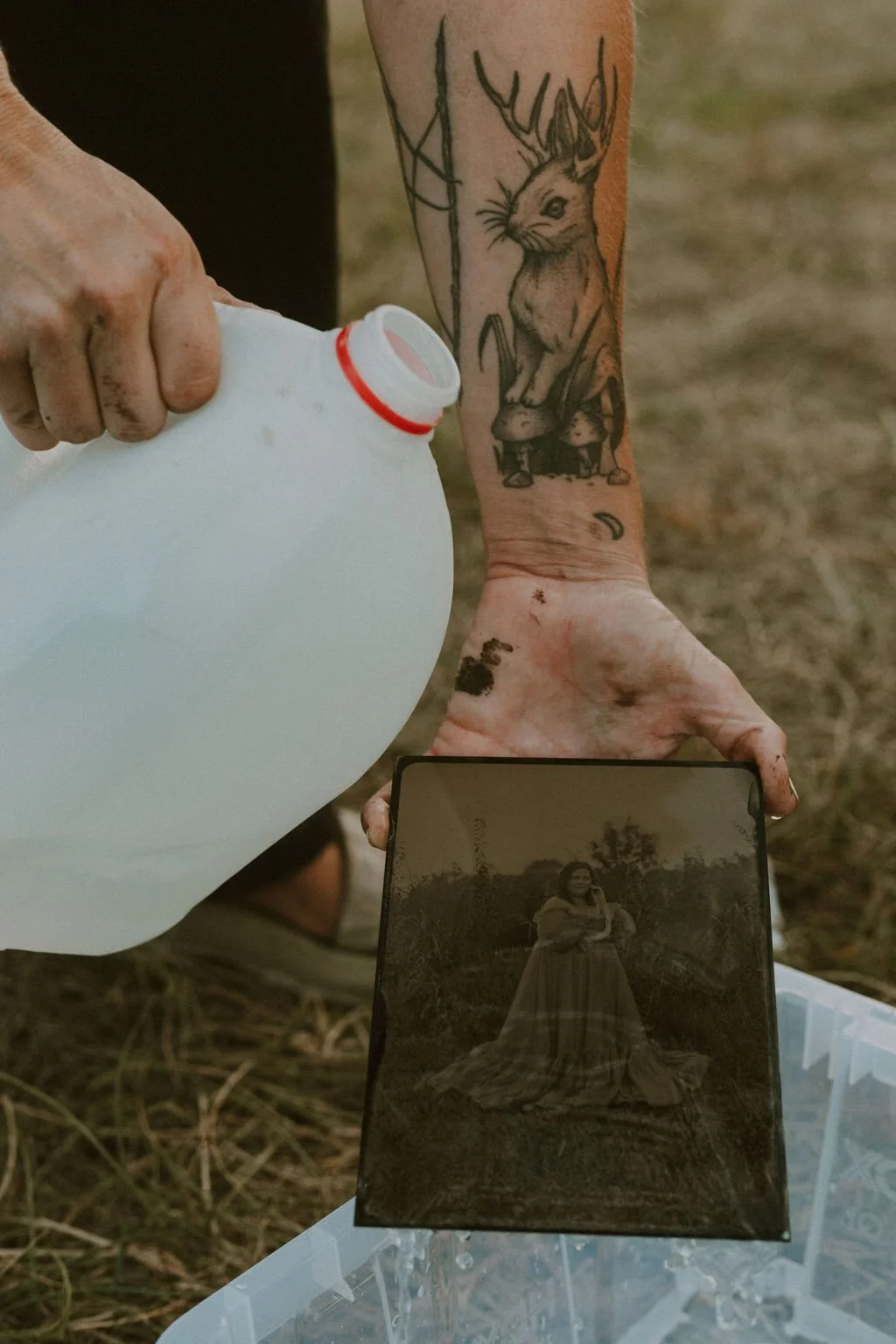
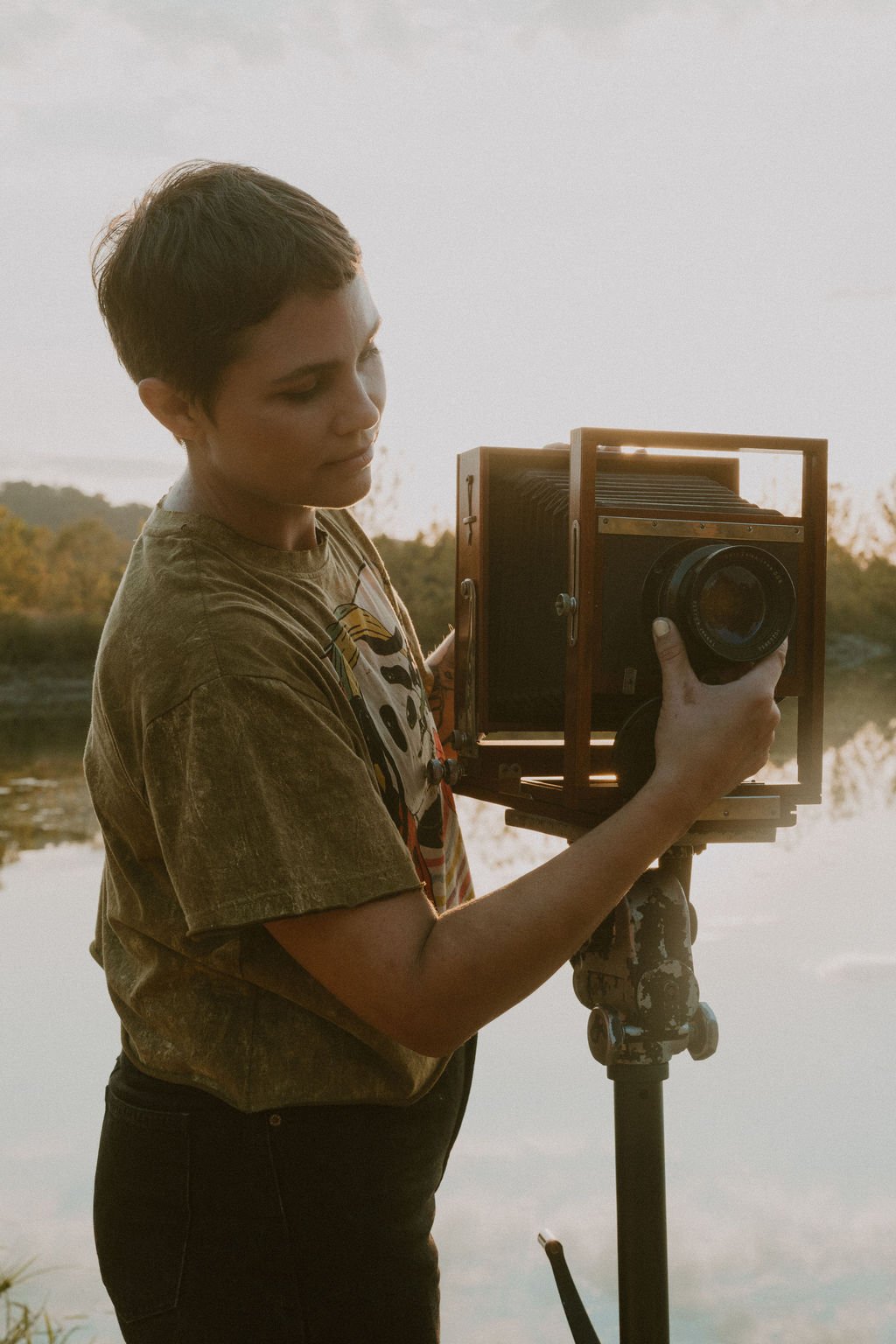
A tintype is a photograph using the wet-plate collodion process which dates back to the mid 1800s. It was historically made on tin, which has been black japanned. Most tintypes that are made in today are actually aluminum. Collodion, which is often referred to as an emulsion, is actually a colloidal suspension, is poured on the plate’s surface. The plate is then placed in a tank with a silver nitrate solution to become sensitive to light. Once it has become sensitized, and while the plate is still wet, it is exposed to light, either natural or artificial. Then the plate is brought back into the red light safe dark room to be developed and processed immediately. The plate’s development process is stopped by rinsing the image with water. After development has been stopped the plate can be brought out into the light. It is placed in a solution that fixes the image, eating away any unexposed silver and makes the image appear as a direct positive. After each plate is washed and dried, it is coated with a protective layer of varnish and ready to send off to its new home. While the process is fairly lengthy in comparison to modern photography, each image taking 15-20 minutes to create, and a one-shot deal, the results are awe inspiring and well worth the wait.
-
Creating an ambrotype follows the same wet plate process as a tintype but uses glass instead of metal.
Using the add-on option at checkout for ambrotypes will upgrade your appointment from a tintype to an ambrotype. Instead of tin/aluminum your photograph will be on glass. This is not an additional ambrotype portrait along with your tintype portrait.
-
At a pop-up price may vary depending on size and if shipping is included but typically the price of plates are as follows":
4×5 plate | $70
5×7 plate | $85
8×10 plate | $100
Shipping $8
Travel fee that is added on for private outdoor sessions within 30 minutes of Cincinnati | $65
-
For a session in studio, yes, you will need to schedule an appointment. If there is an event, yes & no, depending on the event, some events have appointment slots available for pre-booking, others do not. If you have any questions regarding an event please shoot an email or private message on social media our way!
-
It usually takes 15-30 minutes to shoot a single plate. Occasionally we may need to reshoot due to chemical anomalies, blinks etc. which is why sessions are an hour. This allows a bit of time to get things just right and for you to be happy with your image. Any of these seconds plates that aren’t quite perfect but you’d still like to go home with can be purchased at 50% off. All plates will be scanned and emailed within 72 hours from the end of the appointment.
Typically if plates are mailed, allow 7 - 9 business days for it to arrive. Tracking can be provided upon request.
Once your image is made, we must wait for your plate to dry & then varnish it to insure it is protected. The last step of varnishing is not completed at events or sessions, however, once your plate is varnished it will be sent to you. --- If you are local, you may pick your plate up once it is ready if you wish to which is usually 4 - 5 days after your session.
-
Currently I leave my books open two months in advance - if you are planning a trip or event further please email to reserve a date.
-
Each plate must be prepared prior to shooting, which will take a few minutes. First collodion is poured onto glass or metal. Second, the plate is made light sensitive by sitting in a tank of silver nitrate. Once light sensitive it must be exposed, developed & fixed in order for an image to appear. Below are the two lighting options used to expose plates:
Natural light portraits - wet plate "film" is very slow and needs a lot of light to expose correctly. Making images with sunlight means subjects have to stay still anywhere from five seconds up to twenty seconds (sometimes even more), any movement, even slight will make your image blurry. This method allows for more full body images + more people. Please keep in mind that weather/sunlight conditions affect these sessions, prepare to be flexible when booking this type of session. Light changes quickly and we may need to pivot plans if/when changes pop up. Rescheduling may occur, especially the day of if conditions are not optimal for creating images. Thank you for your patience and understanding the nature of this historic method. Click here to view a gallery of images taken with natural light.
Portraits taken using strobes - wet plate "film" is very slow compared to normal film speed, so to make an image without as much sunlight & much quicker, strobe lighting can be used. This will be a bright, very intense burst of light all at once. This gives us a quicker exposure time, meaning you won't have to sit for quite as long. If you have any history or seizures this option is not for you, please notify us and we can use natural lighting for your portrait. Studio portraits allow the subject to photographed from the torso up + do not allow for full body images, think of this as a head shot.
-
On account of size restrictions in the studio, we can easily shoot 3 people on the 8x10 plate, 2 people on the 5x7 plate and 2 people on the 4x5 plate. More can be accommodated, but due to a very shallow depth of field, the more people in the frame, the more difficult it becomes to achieve perfect focus. The more faces we add increases the possibility of some folks being in a softer focus. I am always willing to try a group shot out and see what we get.
-
Anything you'd like! Feel free to dress up or dress as casually as you please. The Wet Plate Process is very similar to black & white film, essentially it is sensitive to all visible light except red. Colors translate very differently to what you would expect. Reds/oranges/yellows are rendered black, while blue is rendered white, so keep this in mind when you bring along clothes, accessories & props for your shoot. Try to avoid solid white or black as those can cause your image to be a bit too high contrast. Patterns, textures and denim also look great. Due to the historical camera used, we don't recommend that you wear text, as it will appear backwards on your photograph. Glasses are do-able, however, it is our observation that most coated glasses end up looking like sunglasses or have an extreme glare once the photograph has been processed. If you don’t feel yourself without them, we can definitely give it a shot!
-
A session includes one tintype, unless additional plates are purchased. I will develop the plate in front of you so we are able to make changes during a session if time allows. If you are unhappy with the image we can always opt to re-shoot if something feels off to you aesthetically. There will be a $25 chemistry fee if we re-shoot the portrait more than once. This fee does not apply to blinks or chemical anomalies that are present and interfere with the subjects of the image. If we reshoot and you would also like to take home any seconds or imperfect plates they can be purchased at 50% off their regular price. Digital scans and scans of seconds/imperfect plates will need to be purchased for $25 per scan if you wish to have a digital copy. If time allows and you would like to add more plates to your session each plate price is based on size - 8x10 @ $110, 5x7 @ $85, 4x5 @ $70.
-
My studio is run out of our home which is a 1920’s German Tudor in College Hill. The studio has a bar, restroom, and seating that I stock with stacks and drinks for you to enjoy which you are here. Please enjoy the working fireplace and viewing the antique Rookwood tiles along the walls. We do have dogs that will not be in the studio, but if you have allergies, please let me know. I also might have some of my family home during your appointment and a very interested 7 year old who will likely make you a bracelet and take your polaroid for you before you leave. There are stairs that lead down to the studio, so please alert me before hand if there are any accessibility accommodations that I can try to consider.
-
Pets are certainly welcome in sessions, just alert me if they are not kid-friendly and let me know how large they are so I can plan for that in our time together. Be aware however, pets, like babies, can move at the last minute and become blurry in photos so we will do our best but cannot promise they will show up perfectly clear each time.
-
Yes. Within 15 miles of my studio in College Hill my travel fee is $65. After that I charge an addition $1 per additional mile for natural light sessions.